Our Process
From a lump of clay to your first cup of the day
Seven stages, roughly three weeks, two firings. Nothing here is unusual for a studio potter — but each step leaves a mark you can feel in the finished mug, so it's worth knowing what happened before it reached your kitchen.
- 01
Clay
We work with an iron-bearing stoneware body that fires warm and speckled. Every batch is wedged by hand to drive out air and align the particles — skip it and a hidden bubble becomes a crack in the kiln.
- 02
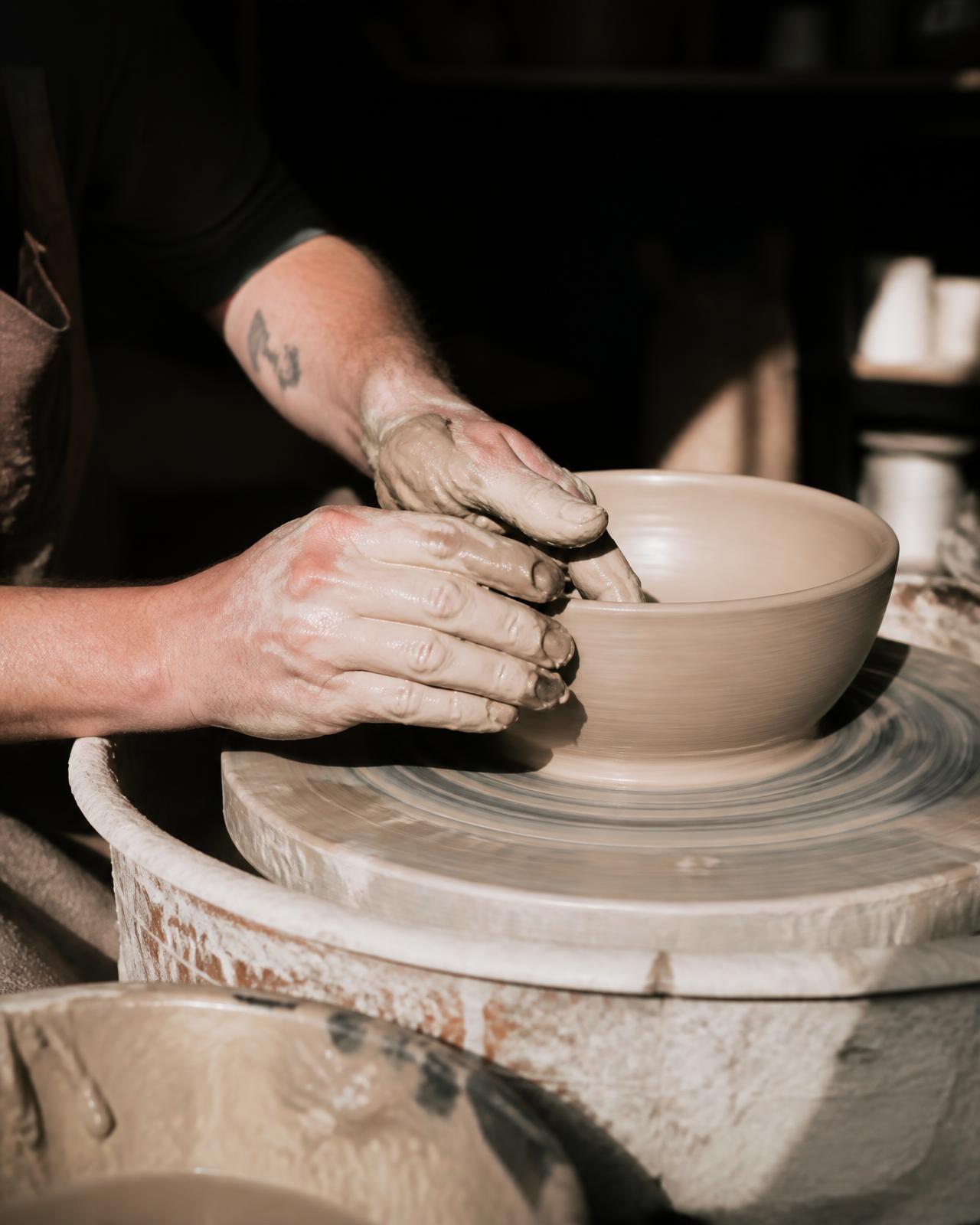
Throwing
Each mug is centred and opened on the wheel, then the wall is raised in three pulls. The potter thins the clay as it rises so the lip finishes fine and the base stays heavy. This is where the mug's balance is decided.
- 03
Shaping & handles
At leather hard the foot is trimmed and a handle is pulled from a separate lump of wet clay, scored, slipped, and attached. Pulled handles align the clay along their length, which makes them far stronger than moulded ones.
- 04
Drying
Mugs dry slowly under plastic for several days so the handle and body shrink at the same rate. Rushing this stage is the most common cause of a cracked join.
- 05
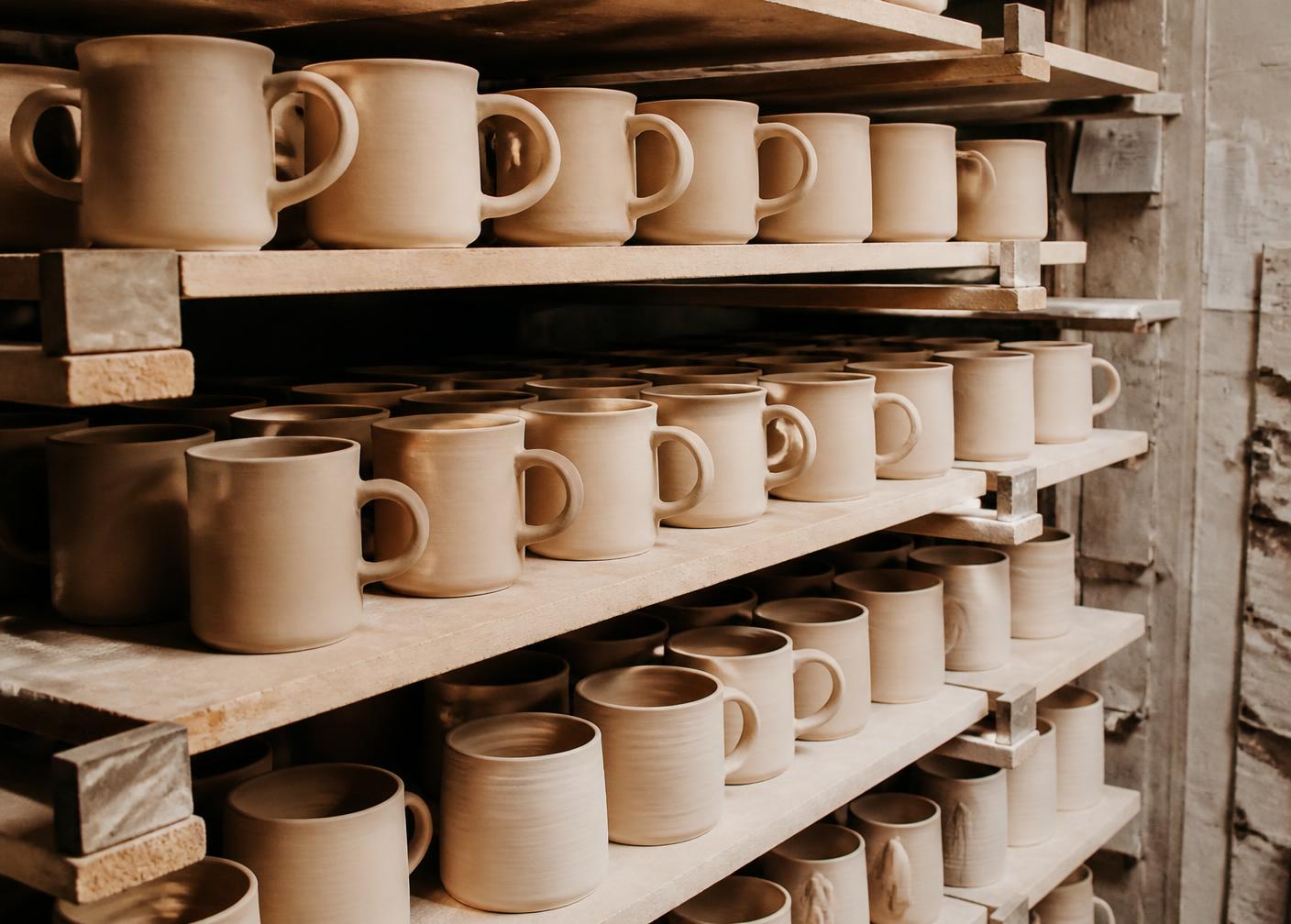
Bisque firing
A first firing to cone 06 (around 1,000°C) burns out organics and turns the clay into porous bisque — hard enough to handle, thirsty enough to absorb glaze evenly.
- 06
Glazing
Glazes are mixed, sieved, and dipped by hand. Dipping lays down a thicker coat than spraying, which is why the surface breaks over rims and throwing lines instead of sitting flat.
- 07
Glaze firing
The final firing runs to cone 6, roughly 1,220°C, with a slow cool so reactive glazes have time to move. The clay vitrifies here: dense, non-porous, and finished. Around one piece in ten doesn't survive.
Why it matters
The kiln always has a vote.
We can control the clay, the form, the glaze recipe, and the firing schedule. We cannot control exactly how a reactive glaze will pool on the third shelf from the bottom. That last unpredictable margin is what separates handmade pottery from manufactured ware — and it's why every mug you receive is a specific object rather than a copy of one.
It also means loss. Roughly one piece in ten cracks, slumps, or comes out of the glaze firing with a surface we won't sell. Those go in the shard pile, which is its own kind of honesty.
The result
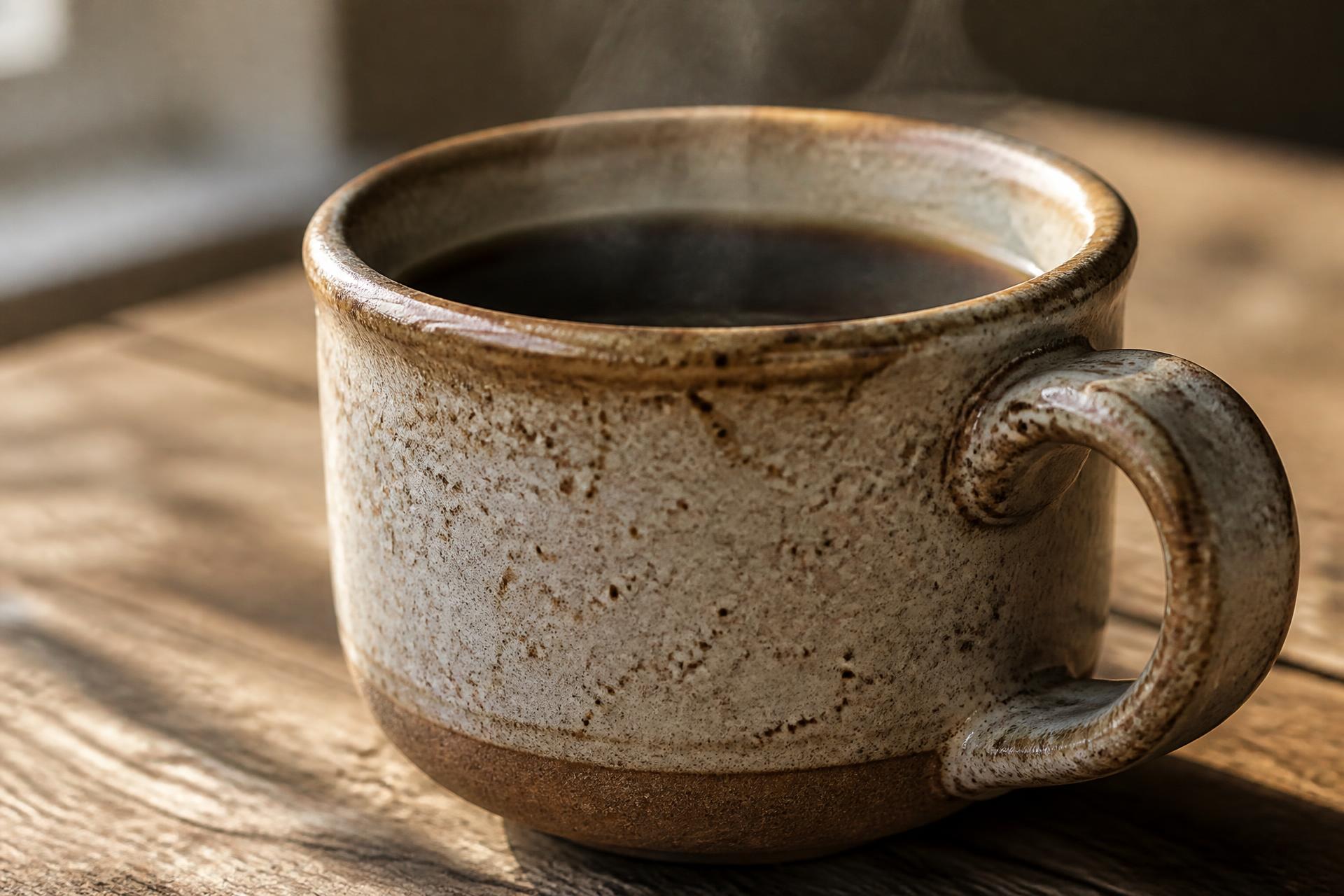
A mug that earns its place on the counter.
Thin at the lip, heavy at the base, warm to hold, and food safe for life. Fired stoneware outlasts almost everything else in a kitchen — the oldest surviving pottery is around twenty thousand years old.
The Studio Letter
New glazes, before they sell out.
Limited-edition firings are usually gone within a day. Subscribers see the kiln opening first, plus notes on new collections and studio openings.