Journal · 6 min read · March 2026
What Is the Difference Between Ceramic and Stoneware Mugs?
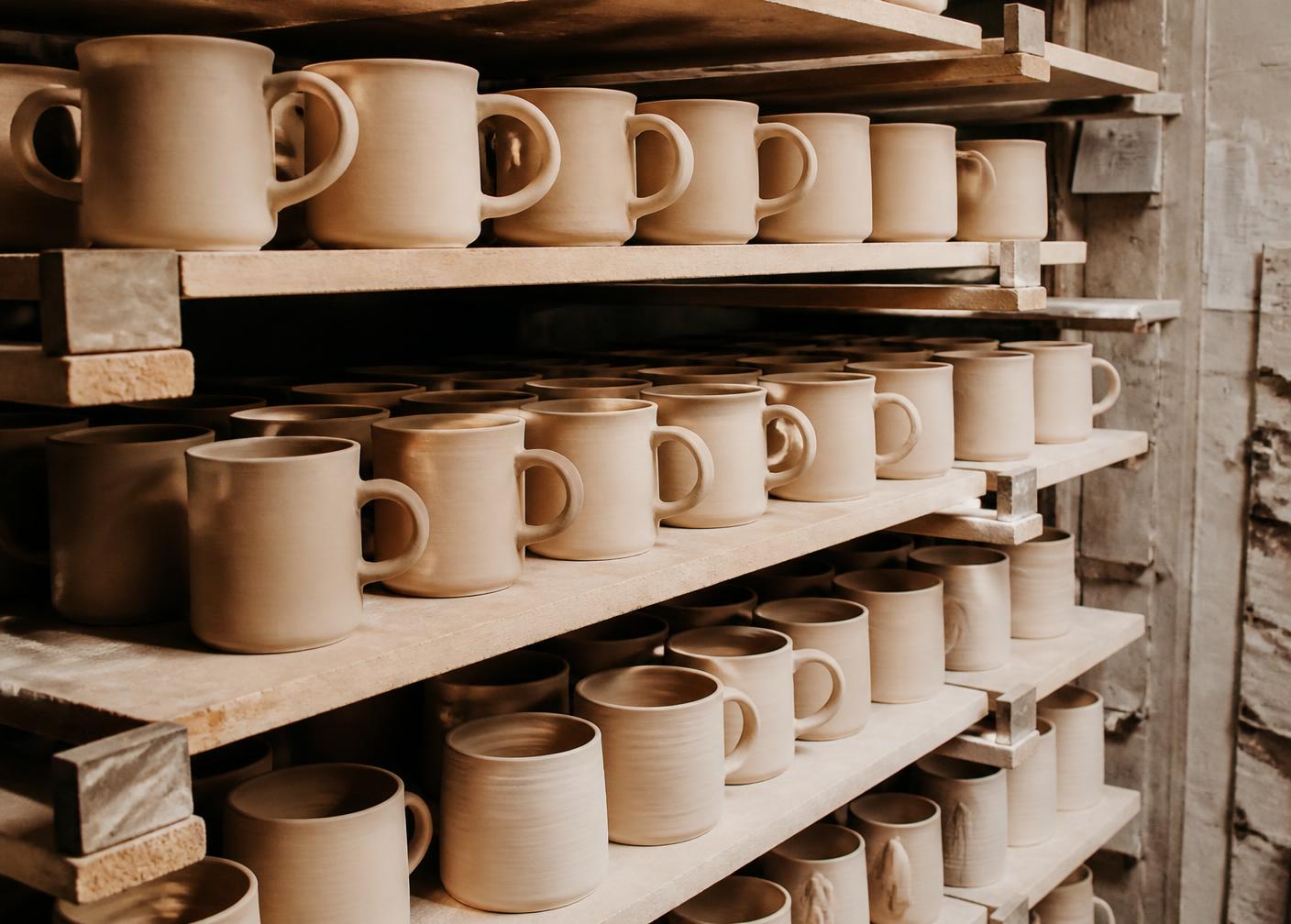
People shopping for a coffee cup often ask whether they should buy ceramic or stoneware. It is a slightly mismatched question: stoneware is a category of ceramic, in the same way that a sedan is a category of car. Porcelain and earthenware are ceramics too.
What actually separates them is how hot the clay is fired and what that does to the finished piece.
Firing temperature is the real dividing line
Earthenware is fired low, usually around 1,000–1,150°C. The clay never fully vitrifies, so the body stays slightly porous and depends on its glaze to hold liquid. Chip the glaze and the piece will start to absorb.
Stoneware is fired hot, typically 1,200–1,300°C. At that temperature the clay particles partially melt and fuse. The body becomes vitrified — effectively non-porous whether or not it is glazed. That is why a stoneware coffee mug can have a bare clay foot and still be perfectly food safe.
Porcelain is fired hot as well, from a whiter, finer clay. It is the most translucent and the most brittle at thin sections.
What that means for your morning coffee
- Heat retention: stoneware is denser and thicker, so it holds temperature noticeably longer than thin porcelain.
- Durability: vitrified stoneware resists chipping and will not weep if the glaze is scratched.
- Weight: stoneware feels substantial. Some people love that; if you want feather-light, porcelain is your material.
- Dishwasher and microwave: high-fired stoneware handles both, assuming no metallic glaze or lustre was used.
So which should you buy?
For a daily coffee mug, stoneware is usually the better material. It is tougher, keeps coffee hot, and takes the kind of rich reactive glazes that make a handmade mug worth looking at. Porcelain suits tea and espresso, where a thin lip and lighter body are part of the experience.
Every mug we make at Epic Pottery is high-fire stoneware, fired to cone 6 in an electric kiln.
Browse handmade ceramic mugs, design custom mugs or stands, or read about how our pottery is made.